






Extended Research






Extended Research
- Trending
- Comments
- Latest


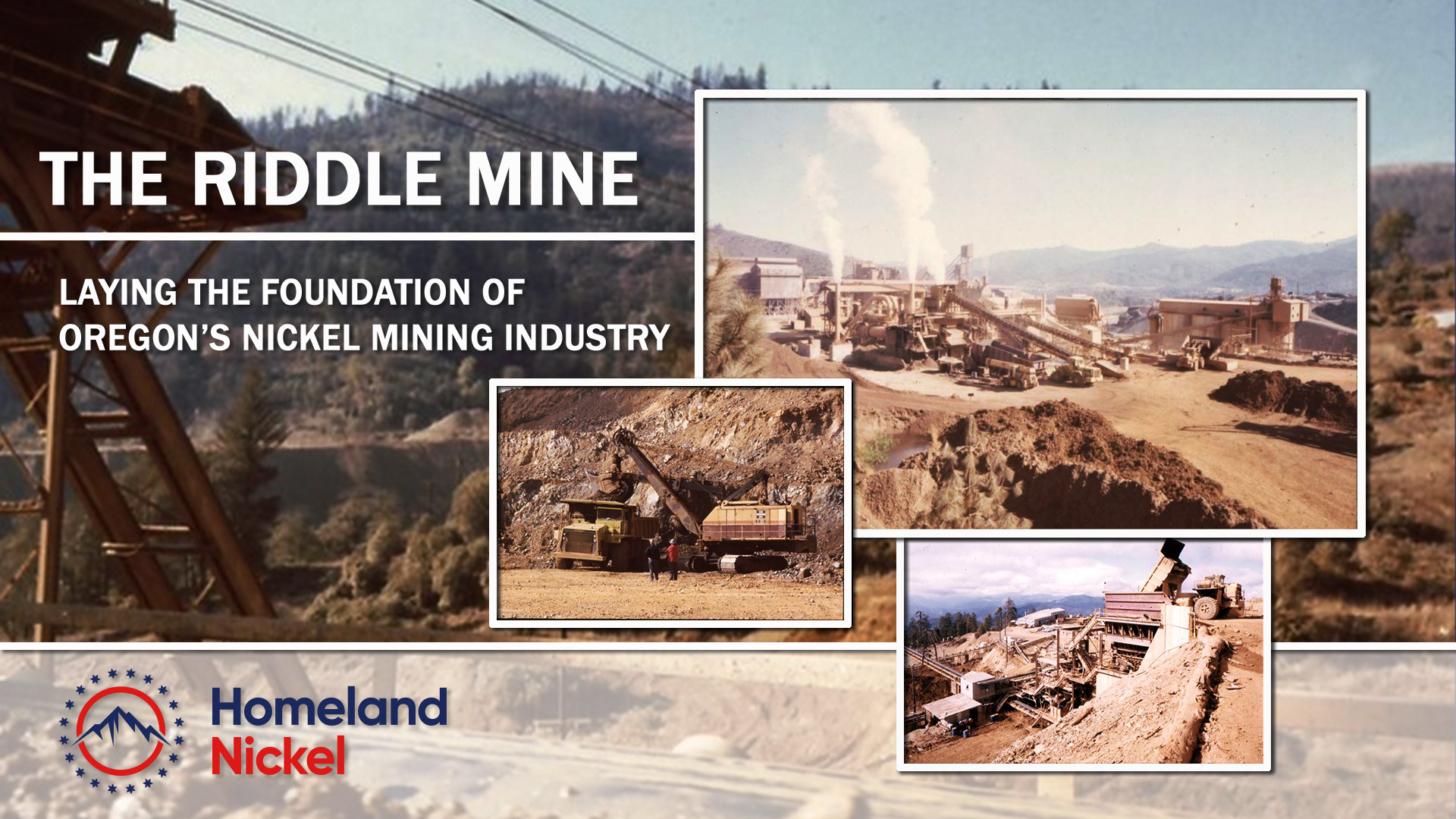

The Riddle/ Hanna Nickel Mine Overview: Brief Introduction
Driving Forces of Geology: Unraveling the Complex History of the Klamath Mountains
Southern Oregon’s Nickel Laterite Deposits: Formation, Characteristics, and Economic Importance
The Nickel-Bearing Saprolite Deposits of the Riddle Mine: Exploring the Nickel-Bearing Saprolite of the Riddle Mine and Its Geological Context
The Riddle Mine History: Covering the History of the Riddle Mine and associated operations
Hanna Nickel Smelting Company: Looking into the establishment of the Hanna Nickel Smelting Company and the development of the worlds first nickel smelter.
Economic Impacts of the Riddle/ Hanna Nickel mining and Smelting operations: Discussing the economic impacts and government involvement developing the Riddle Mine
Homeland Nickel – Reviving Southern Oregon’s Nickel Legacy: Discussing Homeland Nickel’s Strategic Exploration Initiatives
Conclusion: Highlighting Homeland Nickel’s strategic initiatives in the region to help secure a a new domestic supply of nickel amidst growing global demand and economic uncertainties.
References
The Riddle Mine, commonly referred to as the Hanna Nickel Mine, is a historic nickel-producing site located on Nickel Mountain in Douglas County, Southern Oregon. The mine, located approximately four miles west of the town of Riddle and situated at an elevation of 2,740 feet, significantly contributed to the American nickel supply from its opening in 1954 until its official closure in 1998, playing a crucial role in driving the local economy for over 40 years. The mine footprint was approximately 2.7 sq km or about 650 ac.
Figure 1 – The Hanna Mining Company Nickel Smelting facility
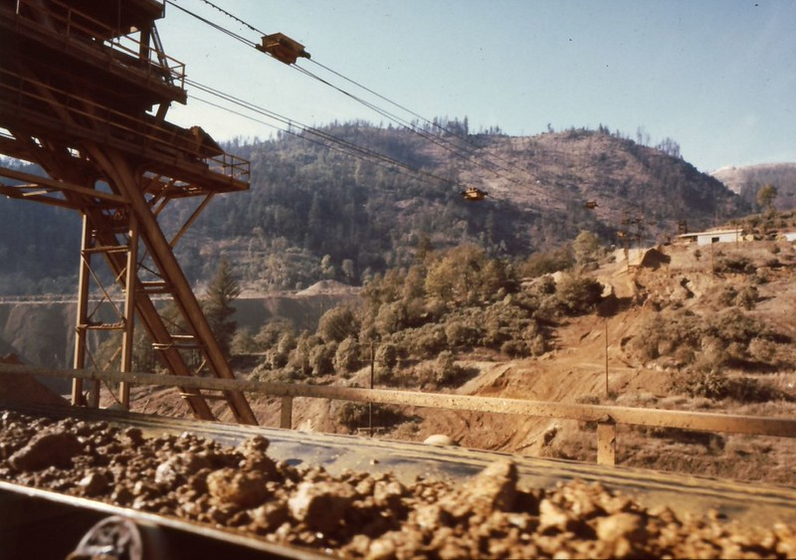
Historically, the Riddle Mine was recognized for its high-grade nickel-bearing saprolite, a weathered rock material that developed over a Jurassic-age ultramafic body. While garnierite was the sweetener for the project, most of the ore mined was the overlying lateritic soil. In fact, the first resource estimates only considered the garnierite, dismissing the lateritic soil which ultimately became the main resource mined at Riddle. Overall, the ore had an average grade of 1.18-1.5%. with nickel concentrations exceeding 5% in the garnierite-rich material, along with the presence of cobalt. However, the technologies they had access to were expensive and not as refined for the lower grades contained in the soils leading them to adopt new technologies and processes to unlock Riddle’s full potential.
During its operation, the Riddle Mine produced an average of 12,000 metric tons (tonnes) of nickel per year for a total production of 50 million tonnes (Mt) of raw nickel laterite over roughly 37-44 years.
Given the current high prices of nickel, advancements in mining technologies, and geopolitical tensions affecting global supply chains, there is renewed interest in potentially reactivating operations in the area. This report aims to provide a comprehensive overview of the Riddle Mine’s history and geological significance in relation to Homeland Nickel, assessing the potential for renewed nickel production in this region where America’s largest ever nickel mine operated.
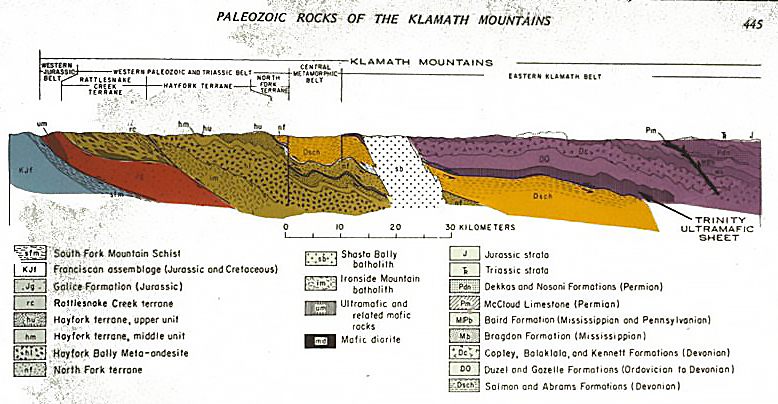
The rocks found in the Klamath Mountains were formed from island arcs and land ridges that originated in the Pacific Ocean. These island masses consisted of broken parts of older continents and volcanic islands that developed in areas where tectonic plates collide, known as subduction zones. Some of these rocks are as old as 500 million years, dating back to the early Paleozoic Era.
Over the course of geological history, specifically between 260 and 130 million years ago, eight island sections, known as terranes, drifted eastward on the ancient Farallon Plate. Eventually, these terranes collided with the North American Plate. Each time an island section joined the continent, it brought along rocks of a similar age. As these terranes merged, the intense heat and pressure from the subduction process transformed the existing rocks, creating magma that pushed into the surrounding materials, forming large bodies of solidified magma called plutons.
Common types of rocks found in the Klamath Mountains include serpentinite, which forms from the metamorphism of oceanic rocks (mainly peridotite and dunite), along with various intrusive rocks such as gabbro and granodiorite. This diverse rock composition reflects the complex geological processes that occurred during the formation of the mountains.
Figure 2: Formation of the Klamath Mountains
Southern Oregon’s geology, particularly within the Klamath Mountains, presents a unique environment for the development of nickel laterite deposits. This area is distinguished by extensive ancient ultramafic rocks, which are rich in magnesium and iron and result from igneous and metamorphic processes. These ultramafic rock formations, believed to originate from the Earth’s upper mantle, are the primary source rocks for nickel laterites. The presence of these significant ultramafic exposures is crucial to understanding the region’s geological importance.
Nickel laterites form through the weathering of ultramafic rocks, a process driven by chemical alteration over time. In warm and humid climates, rainwater, which is slightly acidic, interacts with the parent rock, leaching away soluble elements. This weathering process concentrates nickel, iron, and aluminum in residual soil layers near the surface while other more mobile elements are removed. Consequently, the lateritic soils obtained from this process are enriched in nickel, cobalt and chromium, creating economically viable deposits that are often found at or close to the Earth’s surface.
Nickel laterite deposits are typically located at the surface due to their formation process. As laterites develop through in-situ weathering, erosion and geological uplift over millions of years have exposed these altered profiles, making them accessible for mining. Their shallow location allows for the use of surface mining techniques, such as open-pit and strip mining, which involve the removal of a thin layer of vegetation and overburden to access the ore. This characteristic of being near the surface is a hallmark of laterite deposits worldwide (such as in Indonesia, New Caledonia, Brazil and Cuba) and is equally applicable to those found in Southern Oregon.
Southern Oregon and Northern California are notable as the only location in the United States with significant nickel laterite deposits. Although lateritic weathering can occur in various global regions, the scale and economic potential of the occurrences in this area position it as a key domestic source of nickel. The United States Geological Survey (USGS) has recognized numerous nickel laterite sites in Southern Oregon and Northern California, several of which are now under the control of Homeland Nickel.
What sets the nickel laterite deposits of Southern Oregon apart is their geological context outside the typical tropical and subtropical belts where most major global laterite deposits are found. This unusual geographical positioning indicates a distinct paleoclimatic and tectonic history that has allowed for the intense weathering of ultramafic rocks. Additionally, the Nickel Mountain deposit is unique in that garnierite, a high-grade nickel silicate mineral, is present in abundance, further enhancing the geological significance of these vital domestic resources.
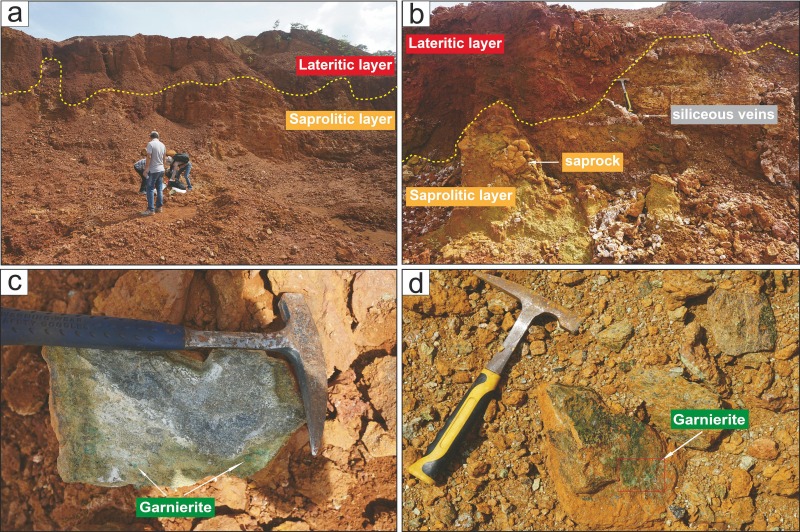
The Riddle Mine is characterized by its distinctive nickel-bearing saprolite deposits. This saprolite developed during the early Tertiary period (~5 Mya) over a northeast-trending ultramafic body of Jurassic age (~175 Mya). The ultramafic rocks, rich in magnesium and iron, serve as the parent material for the nickel mineralization found at the site. The weathering process concentrated nickel formingthese saprolite layers, making them more likely to be economically viable for mining operations. The Nickel Mountain deposit is particularly notable for its unique mineralogy, where the nickel silicate mineral garnierite is present, distinguishing it from many other laterite deposits globally.
Figure 3: This image shows a typical weathered profile developed on ultramafic rocks, which are the source material for nickel laterite deposits.
The geological setting of the Riddle Mine shares significant commonalities with other nickel laterite occurrences in Southern Oregon, such as Cleopatra, Red Flat, Eight Dollar Mountain, and Woodcock Mountain. This setting is defined by the Josephine Ophiolite Complex (JOC), the single largest concentration of ultramafic rocks in North America. The known laterites within the JOC are all situated within the broader Klamath Mountains geological province, which is known for its extensive exposures of ancient ultramafic rock formations. The process of nickel laterite formation is consistent across these locations, leading to the development of nickel-enriched saprolite and lateritic soils at or near the surface.
Specifically, Woodcock Mountain is identified as being part of the same geological formation as Cleopatra, Red Flat, and Eight Dollar Mountain. This indicates a shared geological history and similar potential for nickel laterite development across these sites. While the Riddle Mine (Nickel Mountain) is noted for its predominant garnierite mineralization, the widespread presence of nickel laterite overlying serpentinized peridotite, a type of altered ultramafic rock, is a common geological feature across many of these Southern Oregon deposits, including areas like Rough and Ready. This regional geological consistency underscores the potential for further nickel exploration and development throughout these adjacent districts.
Nickel mineralization on Nickel Mountain was first discovered in 1864 by sheep herders, however, limited work was done on the property until the 1940s when the USGS mapped the area as part of the World War II effort to identify strategic resources of metal that would be needed in the war effort.
In 1948, Howard P. D. Johnson initiated a comprehensive phase of exploration and development. This involved detailed geological mapping, drilling programs, and metallurgical testing to assess the size, grade, and characteristics of the deposit. Johnson approached the M.A. Hanna Mining Company and a deal was signed to acquire the property and spearhead the efforts to develop both the mine first and eventually an associated smelter built with the involvement of the US government (more on that later).
The work during the years of 1948 to 1954 have included:
This intensive preparatory work culminated in the successful establishment of the Hanna Mining Co. and the Hanna Nickel Smelting Company, and commercial production began in 1954. The transition from discovery to full-scale operation within six years highlights the significant investment and coordinated effort that brought this important domestic nickel source online.
In 1952 the US Government built a smelting facility for the sole purpose of stockpiling nickel for use in jet engines bound for the Korean war. Built in tandem with the Hanna Nickel Company who had signed a large offtake agreement with the government, formed the Hanna Nickel Smelting Company and took full procession of the smelter in 1954 for $53 million USD. At the time it was America’s first and only nickel smelter and would go on to employ 650 people at its peak of production in the late 1970’s to early 1980’s.
Figure 4: Hanna Nickel Smelting Facility
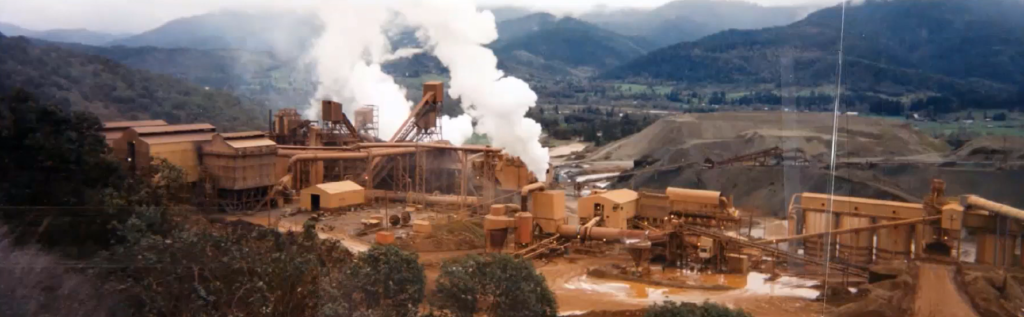
The smelter could process approximately 2,400 tons of ore per day to produce an average of 12,000 tons per year of nickel and produced a 50% ferronickel pig iron alloy used largely by the steel industry. While this was great at the time and fit the needs of the economy, Hanna had to get creative in its approach to keep the smelter operational as nickel prices declined. While ferronickel was in high demand the process to get there was not cost effective at the time prompting Hanna to refine the processing and make modifications such as wet screening to reduce impurities. In tandem, Hanna also commissioned studies to explore extracting minerals from the slag. Today, that slag is used for sandblasting and as backing granules on shingles. However, unfortunately for Hanna, the price of nickel declined faster than the tech could be developed leading to the closure of the mine and smelting facility to officially close in 1987.
Figure 5: Hanna Nickel Smelter drying facility.
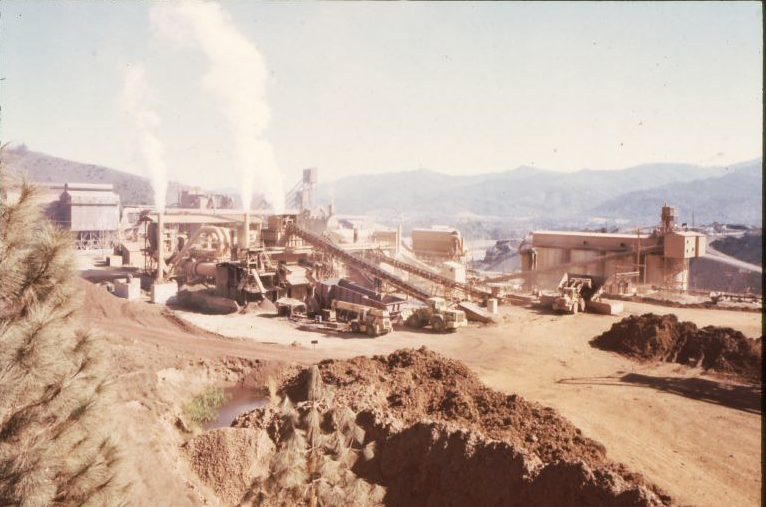
In 1989 the facility along with the mine was purchased by the Glenbrook Nickel company, which was part of a British Columbia company called Cominco Resources International. Initially they used ore left behind by Hanna, however with other nickel operations within their portfolio, Glenbrook built a $30 million off-loading and drying facility at the Port of Coos Bay to handle over 800,000 tons of imported ore annually and began bringing in ore from New Caledonia. At its peak in the early 1990’s, the facility produced approximately 36 million pounds of nickel annually using a combination of domestic and imported sources, significantly exceeding Hanna’s historical average of ~26 million pounds per year. Mining operations would continue until 1996 and the smelter closed permanently in 1998.
Over the next few years, the facility was dismantled.
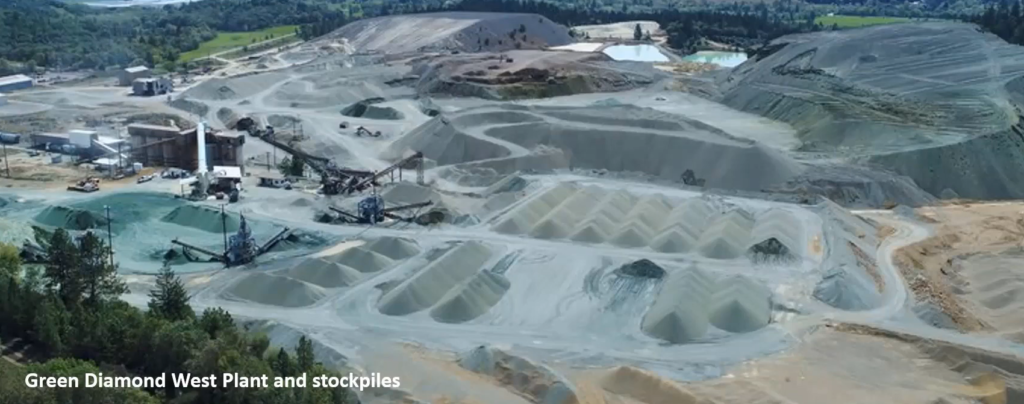
In 1999, Green Diamond Performance Materials acquired the property on which the mine and facility were located and began processing the slag left behind. Using modern technology, the company began processing the roughly 10-million-ton magnesium orthosilicate reserve into abrasive blast media, roofing granules, and specialty aggregates. These operations continue today and produce over 40 distinct products from the same slag.
Figure 6: Green Diamond Performance Materials Operations 1999
The Hanna Nickel Mine played an integral role in the economic and social development of Riddle, Oregon. From its commencement in 1954, the mine and its associated smelter provided continuous, year-round employment for more than 500 individuals. This steady employment attracted workers and their families to the area, leading to increased demand for housing, services, and local businesses. The financing and development of the Riddle operation were significant undertakings, involving a deal where the U.S. Government helped develop and build the operation, which M.A. Hanna then managed. This large-scale industrial presence had a profound and lasting impact on the small town, shaping its infrastructure and community growth throughout the mine’s operational life until 1998.
The U.S. Government’s involvement with the Hanna Nickel Mine stemmed from a strategic need to establish a domestic source of nickel, a critical mineral for defense and industrial applications. As early as 1948, the government actively urged the M.A. Hanna Company to develop the Nickel Mountain deposit. Under President Eisenhower’s administration, the U.S. Government formalized its support by signing contracts with M.A. Hanna Co. and its subsidiaries, including Hanna Mining Co. (then Hanna Coal & Ore Corp.). These agreements were instrumental in financing and facilitating the construction and operation of the ferronickel mine in Riddle. The government’s backing enabled the establishment of an operation capable of producing 11 million pounds of nickel per year, a substantial output for domestic supply underscoring the national importance placed on reducing reliance on foreign nickel supplies, especially in the post-World War II and Cold War eras.
Today, we are seeing a very similar scenario play out as the US has all but one operating nickel mine and largely depends on imports of this critically important mineral. Coupled with China’s stranglehold of refined critical minerals, Oregon could once again be looking to nickel mining to grow the local economy and become a strategic critical mineral asset in North America.
Homeland Nickel is actively engaged in exploring and developing several nickel laterite properties in Southern Oregon, strategically focusing on areas with the same geology as the Riddle Mine, also known as the Hanna Nickel Mine and within the Klamath Mountains. While Homeland has not acquired the Riddle Mine itself, which is believed to have been mined out, its portfolio includes nine significant projects that reflect the region’s geological potential for nickel production. These properties, such as Red Flat, Cleopatra, Eight Dollar Mountain, Woodcock Mountain, and Rough and Ready were previously explored and have historical nickel laterite lenses defined on them.
Figure 7: Homeland Nickel Projects
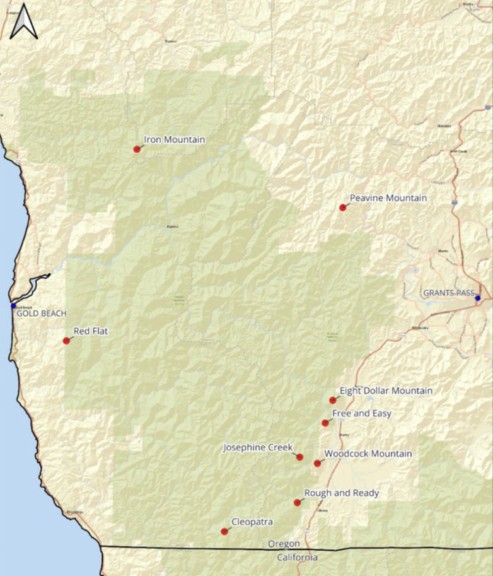
The Red Flat project alone holds a historical resource estimate of approximately 18.8 million tonnes with an average nickel grade of 0.84%. Similarly, Cleopatra boasts a historical resource of 39.5 million tonnes grading 0.93% nickel. Both resources have been determined from the upper 10 feet of lateritic soil and rock. These figures highlight the promising mineralization within Homeland Nickel’s holdings and the ongoing interest in the region’s resources, which were once the focus of significant government investment and development during the mid-20th century.
Today, processing technology has well advanced and new opportunities have been presenting themselves to process the ore. Just recently, the company signed a deal with Brazilian Nickel to use their Heap Leach process which has proven to be effective in recovering nickel, is cost effective, and reduces environmental impacts. The company could also use a combination of pyro metallurgy and hydro metallurgy to maximize efficiency and capitalize on by-products but either way the technology for both processes has come a long way since operations ceased in Oregon.
Homeland Nickel’s current initiatives are a continuation of the legacy established at the Riddle Mine, emphasizing the importance of local exploration efforts in ensuring a sustainable domestic nickel supply. The similarities in geological features between Homeland’s projects and the Riddle Mine suggest that the lessons learned from past operations can guide modern exploration strategies. As the demand for nickel grows and the call for domestic supply gets louder, the focus on Southern Oregon’s nickel laterite deposits should be at the forefront of discussions to not only support the critical mineral supply chain but also the region’s economic future.
The Riddle Mine, once a significant nickel producer in the United States, highlights the untapped potential of Southern Oregon’s nickel laterite deposits. With a rich history of production and a geological framework conducive to high-grade nickel mineralization, the region is poised for renewed interest and investment. The mine’s legacy not only drove local economic development through job creation and infrastructure growth but also established a critical domestic source of nickel during a time of geopolitical uncertainty.
Homeland Nickel is strategically positioned to capitalize on this opportunity, actively holding and advancing exploration on nine promising projects near the Riddle Mine. With substantial historical resource estimates at sites like Red Flat and Cleopatra, the company aims to meet the increasing global demand for nickel. The significant grades and volumes of nickel available in these projects suggest strong potential for profitable mining operations.
As the U.S. seeks to secure its domestic supply of critical minerals, the revival of operations in Southern Oregon could play a crucial role in addressing this need. Homeland Nickel’s initiatives, combined with the historical context of the Riddle Mine, underscore the importance of local exploration efforts. Investors should consider the opportunities presented by Homeland Nickel in this vital sector, which is not only essential for technological advancement but also for ensuring the future of domestic mineral supply chains.
Disclosure
At the time of creation, Homeland Nickel is a client of Insidexploration Analytics Inc.
Disclaimer
Project Reports are under the Issuers editorial control and published on Insidexploration. Information contained in Project Reports may change over time and may differ from other sources. For more information, please reference www.explorationpuma.ca for Corporate, Technical Information and Project Specifications for the latest public disclosures.
Further;
The information herein is meant for informational and entertainment purposes only and does not constitute a recommendation to buy or sell securities. While every effort is taken to ensure the accuracy of everything contained on this website, no warranty of same is expressed or implied. While we endeavor to keep the information up to date and correct, we make no representations or warranties of any kind, express or implied, about the completeness, accuracy, reliability, suitability or availability with respect to the website or the information, products, services, or related graphics contained on the website for any purpose. While every caution has been taken to provide readers with most accurate information, we recommend that you consult a registered investment professional in your jurisdiction before undertaking any investment in any asset whatsoever.
All Issuer content within this space is considered authored by the Company as an extension of their digital presence. All copyrights are retained by each respective creator(s).
Reference
https://pubs.usgs.gov/bul/0931i/report.pdf
https://westernmininghistory.com/mine-detail/10067833/
Riddle Nickel Mine, Douglas County Oregon – https://youtu.be/0LNLId3wMts?si=njzPJwO3gbts0PWf