







Extended Research






Extended Research
- Trending
- Comments
- Latest


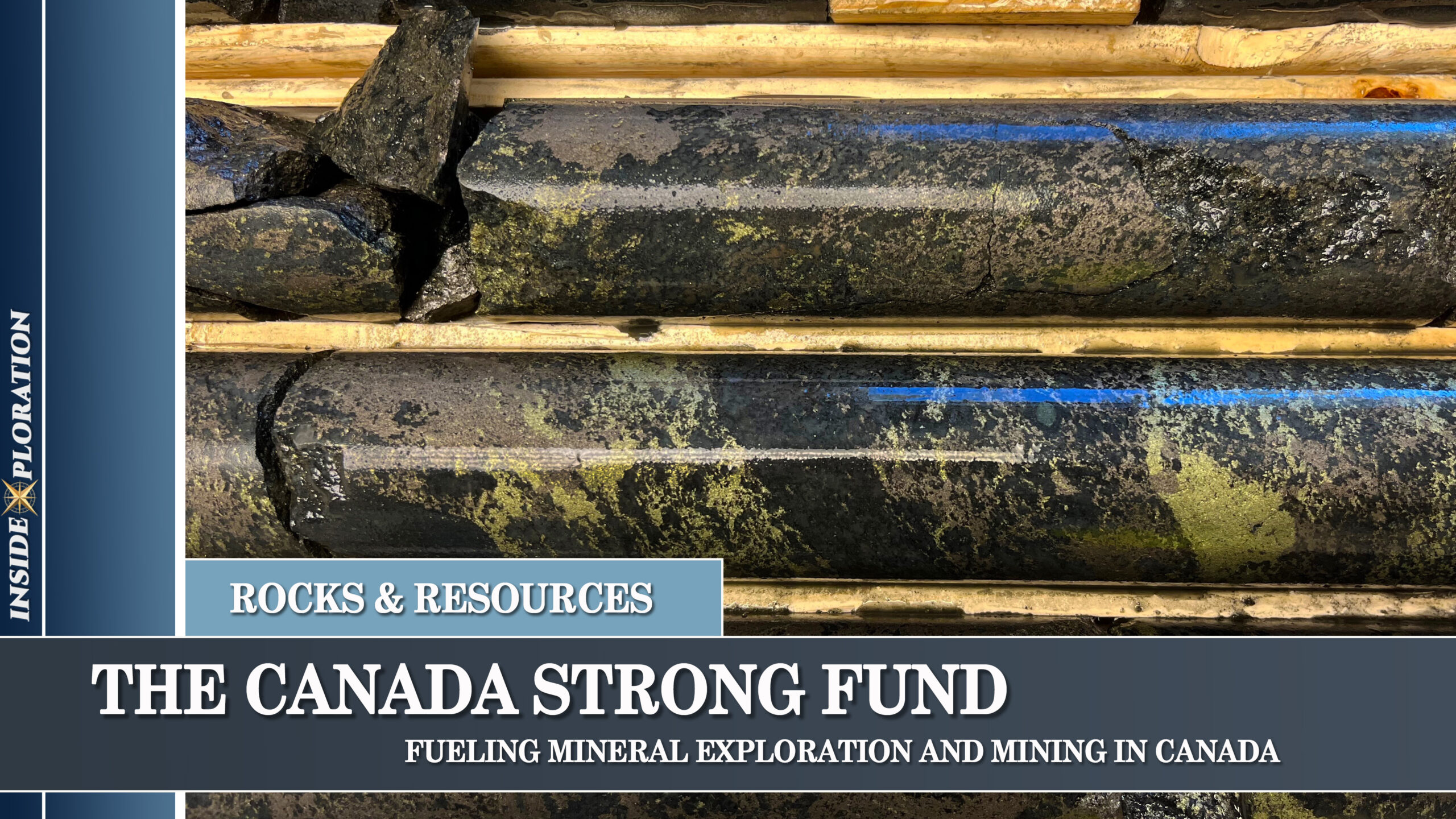
For the first time in decades, Canada is taking a new approach to supporting the economy, one that promises to fuel growth across multiple sectors and benefit the country. Central to this initiative is the Canada Strong Fund, a newly established national sovereign wealth fund designed to invest in key sectors, including infrastructure (pipelines and Ports), advanced manufacturing, energy, mining, clean and conventional energy, critical minerals, and agriculture. As per what we’ve been told so far, this initiative aims to redefine critical mineral mining as a strategic national interest while providing fresh avenues for investment and development within the sector. If there was ever a catalyst that could propel mining into a bull market in the resource sector, this initiative could be what ultimately sets the wheels in motion. The opportunity to invest in projects backed by the fund and favored by the government places resource investors in a unique position to capitalize on their investments directly through the fund and indirectly through companies affiliated to the projects themselves.

While details are still set to be released around how it will all come together, The Canada Strong Fund like any sovereign wealth fund, is slated to serve as a national investment initiative under the stewardship of the Canadian government. Functioning as a sovereign wealth fund, it is designed to operate independently, allowing it to make strategic investment decisions that align with the country’s national priorities while simultaneously boosting economic growth. This independence is crucial, as it will enable the fund to respond swiftly to opportunities and challenges in the global market but also set the table for a once in a lifetime opportunity for investors.
Typically, wealth funds invest in global markets, and if you are interested look into how Norway and Singapore have modelled their funds. However, the Canada Strong fund will reportedly be solely focused on Canadian projects that help drive the economy. Whether its infrastructure projects like pipelines, investment in LNG production or critical minerals, the goal will be the same. Use the fund to accelerate projects that contribute to Canada’s GDP and help insulate Canada’s economy. In theory it sounds promising, but the fact is, it’s never been done before. If successful, it could change the way countries invest in themselves with Canada laying the foundation for the philosophy.
While there has been pushback regarding the fund itself and where the money is coming from, the truth is that using a fund with this much buying power to invest in resources that are essential for a wide array of industries will not only boost our economy, but have a profound effect on other industries like the production of batteries, electric vehicles, and advanced electronics, which are increasingly in demand as the world transitions towards greener energy solutions and AI. By prioritizing these sorts of investments, the fund aims to not only enhance Canada’s mineral exploration and extraction capabilities but also to position the country as a leading player in the global supply chain.
By leveraging the fund’s substantial resources and expertise, these domestic investments will create jobs, stimulate local economies, and attract further private investment, ultimately leading to a more robust and diversified economy. In this way, the fund will not only address immediate economic needs but it also lays the groundwork for long-term prosperity and resilience in the face of global market fluctuations.
Now I know many of you will say where are we getting the money to do this and how does it benefit the everyday Canadians? The truth is nobody knows how it will be funded as details have not been fully disclosed, there is speculation of how the fund might be established. For starters there have been talks of selling bonds to help raise money. Personally, I like this idea. Instead of using taxpayer money, the government could incentivise investment by issuing bonds. By opening its doors to individual Canadian investors, the fund allows for the participation in the funds participation of major projects across key sectors. This inclusivity means that both individual and institutional investors can directly benefit from the anticipated growth and profitability of the projects supported by the fund. Furthermore, its focus on long-term, strategic investments offers the potential for stable returns and portfolio diversification, making it an attractive option for those looking to invest in the resource sector.
Beyond a direct investment into the fund, Investors will be able to track where the fund is allocating money. This will essentially allow investors to invest in line with the fund, focusing on singular projects. As an investor, knowing projects not only have the funds backing them but also the federal government, creates a much more stable investment environment with huge potential upside growth. So, if bonds aren’t your thing, you can access the benefits directly through the companies themselves.
Canada is already recognized as a global leader in mining finance, with over two-thirds of the world’s mining companies listed on Canadian exchanges. The economic impact of the mining sector cannot be overstated. In 2024, the value of Canadian mineral production reached a remarkable $64.3 billion, highlighting its vital role in the national economy. The fund’s mandate to invest in critical minerals and related infrastructure is anticipated to stimulate substantial economic activity. By driving investments into local infrastructure and de-risking projects, the fund is likely to attract further private capital, which will lead to the creation of new industries and the expansion of existing operations. As these projects go into production, the trickle-down effects will contribute positively to local economies, Canada’s GDP and to investors savvy enough to recognize the opportunity.
Moreover, the establishment of new mining projects and the increase in exploration activities will spur job creation and economic development in resource-rich regions. This growth will result in higher tax revenues for provincial and municipal governments, enabling them to reinvest in local services and infrastructure, thus enhancing community well-being. It’s a win-win for everyone including those who hold real estate in these areas.
This is why I believe that The Canada Strong Fund will have substantial benefits for investors and create a trickle-down effect on the Canadian economy. In my opinion, this fund will be transformative and will bolster Canada’s strength as a global energy and critical mineral supplier. Now let’s take a look at some of the projects on the radar for the federal Government as the fund will serve as a national investment initiative under the stewardship of the Canadian government after all and what better way to meet that criteria than the 10 nation building projects already named with a few added notable opportunities.
Lucky for us, we already know that the Canadian federal government, under Prime Minister Mark Carney, has identified and begun fast-tracking several “nation-building projects” aimed at stimulating economic growth, enhancing energy security, and advancing environmental goals. This list is a gift as these projects are part of a broader strategy to connect regions and diversify Canada’s economic output and will be high on the Canada Strong Funds list. In saying that, there are several other projects beyond the “Nation Building” 10 already named that deserve some attention and have been included below.
Located near Timmins, Ontario, the Crawford Project is a significant nickel mining operation and would rank among the largest nickel sulphide projects on the planet. In addition to the Crawford Mine and processing plant, there is also plans for a refinery which will be the only one of its kind in North America. The project is expected to attract $5 billion in investment and create 4,000 new careers and contribute over $70 billion to Canada’s GDP over its 40+ year operational life, along with generating over $16 billion in federal and provincial tax revenues.
Joint venture participants in Canada Nickel include global mining and tech giants such as:
Direct participation and JV participants:
The LNG Canada project represents a monumental undertaking in British Columbia, establishing Canada’s first large-scale liquefied natural gas (LNG) export facility in Kitimat. This facility is designed to process natural gas extracted from northeastern British Columbia, converting it into a liquid form for efficient shipment to global markets. LNG Canada’s phase Two would enhance the facility’s processing, storage, and shipping capabilities by adding two more liquefaction trains, effectively doubling its production capacity. This expansion remains a key part of LNG Canada’s long-term growth strategy, with joint venture participants diligently evaluating its competitiveness. Not to mention that the first phase of LNG Canada alone is expected to spur a 0.4% increase in Canada’s GDP.
Joint venture participants in LNG Canada, who would also be involved in Phase Two, include global energy giants such as:
The Matawinie Mine project, led by Nouveau Monde Graphite (NOU), is recognized as a nation-building initiative in Quebec, focusing on sustainable graphite production essential for electric vehicle batteries. With an expected investment of over $1 billion, this project aims to create approximately 1,000 jobs and contribute significantly to Canada’s GDP while supporting the development of critical mineral infrastructure. The project highlights Canada’s role in the global green economy and aims to establish a secure supply chain for critical minerals.
Participants include:
Located near Logan Lake, British Columbia, Highland Valley Copper (HVC) is one of Canada’s largest copper mines. While not explicitly labeled as a “nation-building project, its ongoing operations and potential expansions are crucial for Canada’s role in supplying critical minerals. Copper is essential for clean energy technologies and infrastructure development and Teck has made significant investments in modernizing and extending the life of this operation, contributing to local employment and regional economic stability.
Investing opportunity for Highland Valley Copper include:
The Fort Hills project, located in the Athabasca oil sands region of Alberta, is a major oil sands mining and bitumen production facility. This “megaproject” was green-lighted with a $14 billion price tag. It represents a substantial investment in Canada’s energy infrastructure, creating jobs and contributing to the country’s energy supply. Suncor also has an emissions-reducing cogeneration project nearing completion in the Alberta oil sands, further demonstrating investment in energy infrastructure which falls inline with federal climat policies.
Joint venture participants in the Fort Hills project include:
The Contrecoeur Container Terminal Project, located in Contrecoeur, Quebec, is a major initiative by the Montreal Port Authority (MPA) to construct a new container port terminal. This expansion aims to significantly increase Canada’s trade capacity and improve logistics, and facilitating the movement of goods to and from international markets. The project includes building a 675-meter wharf with two berths capable of accommodating large vessels from 39,000 to 75,400 deadweight. With the backing of The Montreal Port Authority (MPA), DP World, a global port operator, is partnering with the MPA for the development and operation of the terminal.
To date there is only one public company affiliated with several private entities involved:
Hydro One, a major electricity transmission and distribution company in Ontario, undertakes numerous infrastructure projects vital for economic development. While not specifically named Nation Building the province of Ontario is “fast-tracking power line to fuel northern mining boom” kind of says it all. These types of transmission line projects are essential for connecting new mines, industries, and communities to the provincial grid, supporting economic growth and ensuring reliable energy supply across vast regions. These infrastructure investments are critical for enabling other major projects and a good reason to keep an eye on the company.
Investing opportunities include:
Northland Power is a leading developer and operator of clean and green power infrastructure. The British Columbia government aims to have “eight new renewable energy projects operational” by 2032. Again, while specific “nation-building” project designations for Northland Power have not been applied, their ongoing development and operation of large-scale renewable energy facilities across Canada, such as the Grand Bend Wind Farm in Ontario, are crucial for advancing Canada’s clean energy transition and meeting national climate goals. These projects represent significant investments in sustainable infrastructure and contribute to energy security.
Opportunity to invest lies in:
Overseen by Alto, a federal Crown corporation established in November 2022 and wholly owned by VIA Rail, the project is currently in a co-development phase involving a private-sector consortium. The project is focused on building a high-frequency, high-speed rail service between Québec City and Toronto with an estimated price tag between 60 and 90 billion dollars. This initiative seeks to provide a faster, more reliable, and environmentally sustainable travel option, reducing congestion and improving connectivity across one of Canada’s busiest corridors
The Alto project involves a public-private partnership model. The key public entity overseeing the project is Alto itself which is a crown corporation. On the private side, the Cadence consortium is responsible for the co-development phase.
Opportunity to invest:
The AESC project is a strategic initiative designed to develop infrastructure and economic opportunities in Canada’s Arctic region. This could involve new ports, transportation routes, and resource development, enhancing both economic prosperity and national security in the North. It aims to unlock resources and improve trade capabilities in the region. The first order of this project will be the development of a 400 km all-season road through the Slave Geological Province, extending to the Nunavut border.
There are no current publicly listed companies affiliated to the project, however, once the project is complete it is expected to drive investment and create new opportunities.
Ontario Highway 413 is a proposed 52-kilometer new highway and transit corridor intended to traverse the northwest Greater Toronto Area, specifically through the York, Peel, and Halton Regions. The project, spearheaded by the Ontario Ministry of Transportation (MTO), aims to alleviate traffic congestion, shorten travel times by up to 30 minutes, and support economic activity in the Greater Golden Horseshoe. The provincial government has confirmed the start of construction, with an estimated contribution of $1 billion to Ontario’s GDP and the creation of 6,000 annual jobs.
The project is part of a larger provincial investment in infrastructure but there are no current publicly listed companies affiliated to the project, however, once the project is complete it is expected to drive investment and create new opportunities.
The Vancouver Port Expansion project primarily refers to the Roberts Bank Terminal 2 (RBT2) project, a major initiative by the Vancouver Fraser Port Authority (VFPA) to build a new three-berth marine container terminal in Delta, British Columbia. This expansion aims to significantly increase the Port of Vancouver’s capacity for international trade by adding 2.4 million twenty-foot equivalent units (TEUs) annually. The project is crucial for improving supply chain efficiency, accommodating larger vessels, and supporting Canada’s economic growth and trade capabilities.
While the primary entities involved (VFPA, GCT, DP World) are not publicly traded, large-scale infrastructure projects like this often involve numerous contractors, engineering firms, and suppliers, some of which may be publicly traded.
The Iqaluit Hydro Project aims to develop hydroelectric power infrastructure in Iqaluit, Nunavut. This initiative is designed to provide sustainable and reliable energy sources, reducing reliance on fossil fuels and supporting economic development in northern communities. As the Northern Gateway opens to global shipping, this region could become a central hub and a project like this will enhance energy security supporting future infrastructure development projects. Not to mention the long term benefits of clean energy and job creation that stimulate the local economies.
Currently, there are no publicly listed companies specifically affiliated with the Iqaluit Hydro Project, but the initiative is expected to attract investment and partnerships as it progresses.
In conclusion, it is my belief that the anticipated benefits for investors will be substantial, as the fund’s design allows for both direct and indirect gains through their support in major projects. With the potential to create thousands of jobs and boost local economies, the trickle-down effects of the fund’s investments will positively impact communities across the country. As Canada strengthens its position as a global leader in the energy and mineral supply chains, the Canada Strong Fund might just be the catalyst that propels investment into what has felt like a forgotten sector in this market despite the demand and rise in price of critical mineral.
So now we wait and as with any government initiative, that can be a while but as they begin to unveil specific projects and partnerships, we can look forward to the opportunities that the fund will generate. If this fund works as intended, it will set a precedent for how countries can leverage sovereign wealth to drive growth and innovation. Subsidies simply don’t work and under the current framework, very little funding is allocated to the mining sector. To me this is embarrassing as the foundation of this country was built on mining and there is no shortage of untapped resources buried under bureaucracy right now. Is Mr. Carney on the right path? Only time will tell but I’m hopeful that The Canada Strong Fund will be the catalyst that drives us into the next bull market.
Authored By: Mike Coyle
References
https://www.ctvnews.ca/politics/article/carney-announces-next-of-nation-building-projects-a-look-at-what-made-the-list/
https://nunavutcleanenergy.ca/wp-content/uploads/2026/03/Iqaluit-Phase-0-Business-Case-Decision-Support-Package.pdf
https://www.portvancouver.com/business-and-projects/projects
https://www.port-montreal.com/en/ctc-home/ctc-project
https://www.canada.ca/en/privy-council/major-projects-office/projects/national.html
https://www.altotrain.ca/en/shaping-canadas-future-high-speed-train
https://www.lngcanada.ca/about-us/our-joint-venture-participants/
https://iaac-aeic.gc.ca/050/evaluations/proj/83857
For more mining related content follow me on ceo.ca and check out our website Insidexploration.com